

Yes, a business line of credit includes a draw feature that allows flexible fund access. This mechanism lets you borrow only what you need, when you need it, rather than receiving a lump sum. Creative Capital Solutions helps businesses navigate these financing options to secure working capital efficiently. This guide covers the mechanics of draws, how revolving credit replenishment works, and how to structure your funding strategy for optimal cash flow management.
Draw Feature Mechanics
The draw feature is the core operational component of a line of credit. It defines how a business accesses capital from its approved facility. Understanding this mechanism is critical for managing cash flow without over-leveraging the business.
What is a Draw?
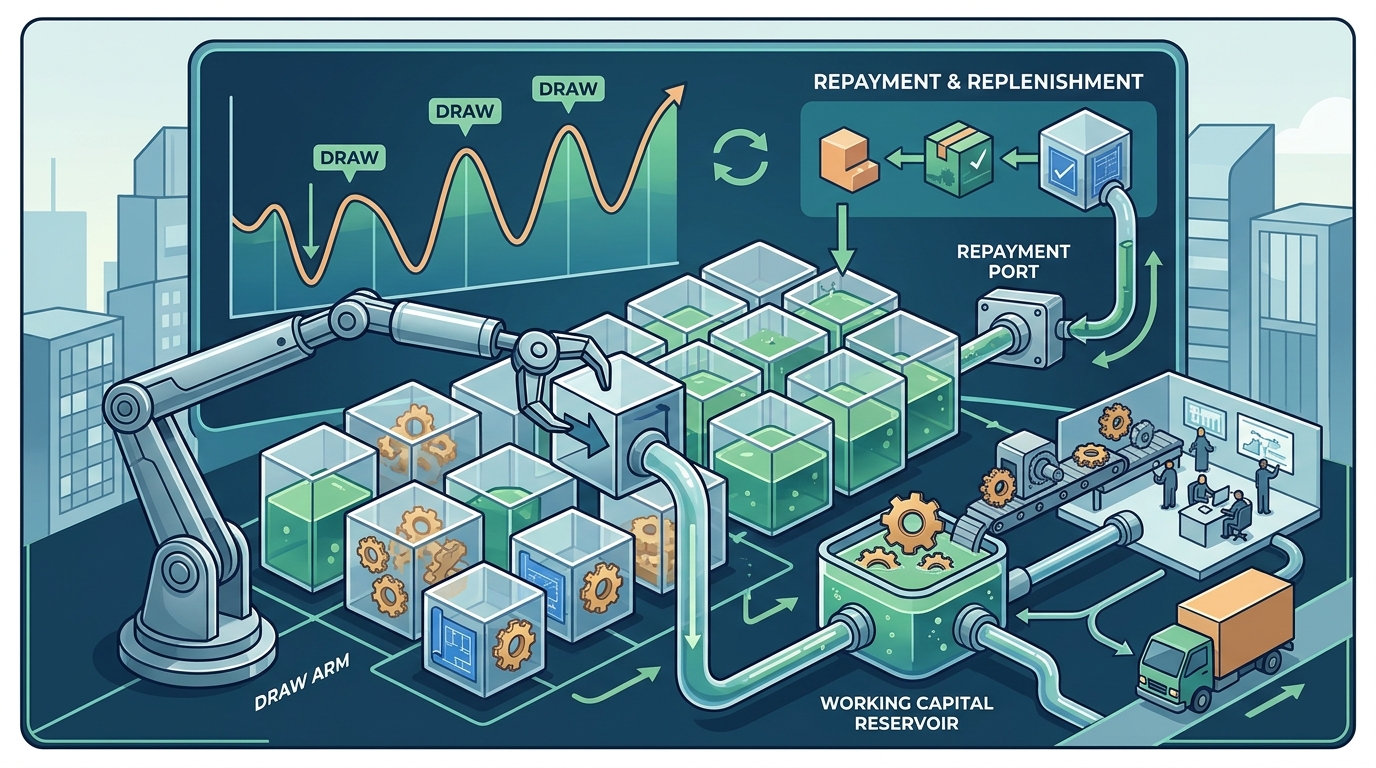
A draw is the act of borrowing funds from an approved line of credit up to the maximum limit. When you initiate a draw, the lender releases the requested amount into your business bank account. You are only responsible for interest on the amount drawn, not the entire credit limit. This structure provides significant flexibility compared to term loans, where the full principal is disbursed at once.
Draw Limits and Availability
Draw Frequency and Minimums
Revolving Credit Replenishment
Revolving credit replenishment is the process by which your available credit limit is restored as you repay the funds you have drawn. This feature distinguishes a line of credit from a term loan, where repaying the loan does not restore borrowing capacity.
How Replenishment Works
Impact on Credit Utilization
Your credit utilization ratio is the percentage of your total credit limit that you are currently using. High utilization can negatively impact your business credit score. To maintain a healthy credit profile, it is advisable to keep your utilization below 30%. By managing your draws and repayments strategically, you can maintain a low utilization ratio while still having access to capital. This is particularly important for businesses that rely on credit for daily operations.
Term and Renewal
Business lines of credit typically have a term ranging from 6 to 36 months. At the end of the term, the facility may expire, or it may be renewed if the lender approves. Some lines of credit are revolving for the entire term, while others may have a draw period followed by a repayment period. Understanding the term structure helps you plan for long-term funding needs. Creative Capital Solutions can help you evaluate which term structure best fits your business cycle and cash flow patterns.
Comparison of Funding Structures
Understanding the differences between a line of credit and other funding options helps you choose the right tool for your needs. The table below summarizes key features of common business financing structures.
| Feature | Business Line of Credit | Term Loan | Merchant Cash Advance |
|---|---|---|---|
| Revolving Credit | Yes, replenishes as you repay | No, fixed repayment schedule | No, fixed repayment schedule |
| Interest Accrual | Only on drawn amount | On full principal | Flat fee, not interest |
| Best For | Fluctuating cash flow needs | Large, one-time purchases | Quick cash for revenue-based businesses |
A business line of credit is ideal for businesses with variable cash flow needs, such as seasonal inventory purchases or unexpected expenses. A term loan is better suited for large, one-time investments like equipment or real estate. A merchant cash advance is a purchase of future receivables, not a loan, and is often used by businesses with strong credit card sales that need quick access to cash.
Key Takeaways
- A draw feature allows you to borrow only what you need from your approved credit limit.
- Revolving credit replenishment restores your available balance as you make repayments.
- You only pay interest on the amount you draw, not the full credit limit.
- Managing your credit utilization below 30% helps maintain a healthy business credit score.
- Lines of credit typically have terms of 6 to 36 months, with varying draw and repayment periods.
- Merchant cash advances are not loans; they are purchases of future receivables.
- Creative Capital Solutions helps you match your funding structure to your specific cash flow needs.
- Always review the terms of your facility, including draw minimums and renewal conditions.
Frequently Asked Questions
What is the minimum draw amount for a business line of credit?
Can I draw from my line of credit multiple times?
Yes, you can draw from your line of credit multiple times as long as you stay within your total credit limit. Each draw reduces your available balance, and each repayment replenishes it.
How quickly can I access funds after a draw?
The speed of funding depends on the provider. Some offer same-day funding for approved draws, while others may take 1-2 business days. Creative Capital Solutions works with providers that offer fast funding options.
Does repaying my line of credit restore my available balance?
Yes, repaying your line of credit restores your available balance. This is known as revolving credit replenishment. As you pay down your balance, you can borrow again up to your total limit.
What is the difference between a line of credit and a term loan?
A line of credit allows you to draw funds as needed and repay them, while a term loan provides a lump sum that you repay over a fixed schedule. Lines of credit are more flexible for variable cash flow needs.
Is a merchant cash advance a loan?
No, a merchant cash advance is not a loan. It is a purchase of your future receivables. You receive a lump sum in exchange for a percentage of your future credit card sales. It does not accrue interest but involves a flat fee.
How does credit utilization affect my business credit score?
High credit utilization can negatively impact your business credit score. It is recommended to keep your utilization below 30% to maintain a healthy credit profile. Managing your draws and repayments strategically helps achieve this.
Can I use a line of credit for any business expense?
Generally, yes, you can use a line of credit for various business expenses, including inventory, payroll, and marketing. However, some providers may have restrictions on how the funds are used. Review the terms of your facility to ensure compliance.
Conclusion
A business line of credit with a draw feature offers unparalleled flexibility for managing cash flow. By understanding how draws and revolving credit replenishment work, you can make informed decisions about your funding strategy. Creative Capital Solutions is here to help you navigate these options and connect you with the right funding providers for your business needs. Whether you need to cover seasonal inventory or address unexpected expenses, a line of credit can provide the financial breathing room your business requires. To explore your options, today.