

A 3-36 month term on a business line of credit offers businesses the flexibility to borrow, repay, and reborrow funds while aligning repayment schedules with seasonal cash flow cycles. This structure supports operational stability and growth without the rigid constraints of fixed-term loans. Creative Capital Solutions provides access to these financing options for businesses in the United States. This guide covers the specific benefits of this term range, including revolving credit structure, payment flexibility, cash flow management, credit building, and prepayment options.
Revolving Credit Structure
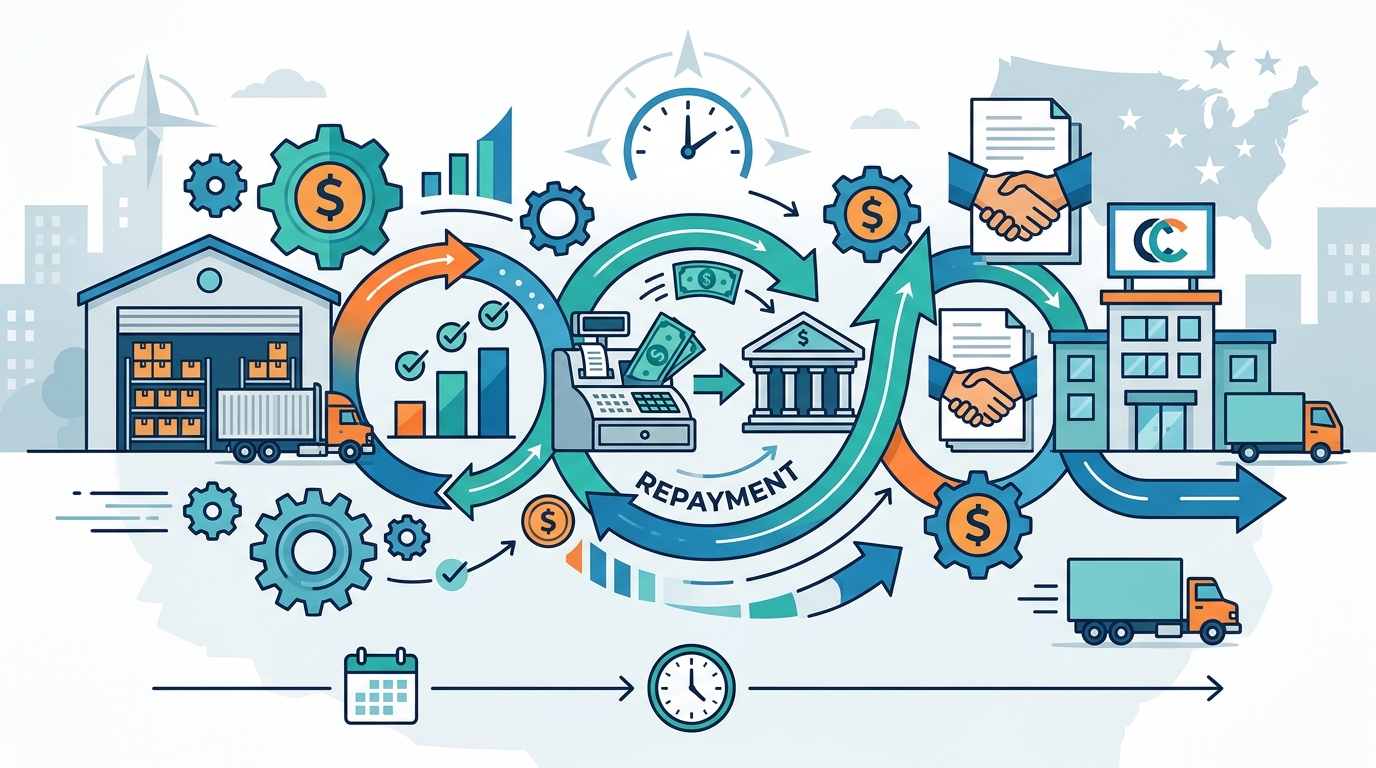
A business line of credit is a type of small business loan that provides funding to draw from whenever you are in need of capital. Unlike a term loan, which provides a lump sum, a line of credit allows you to access a certain amount of money which you can borrow from, pay back, and borrow again. This revolving nature is the defining characteristic of the 3-36 month term structure. The credit limit remains available as long as the account is in good standing and the term has not expired.
Continuous Access to Capital
Term Duration and Renewal
The 3-36 month term defines the lifespan of the credit facility. Shorter terms, such as 3 to 12 months, are often used for immediate cash flow gaps. Longer terms, up to 36 months, provide a stable foundation for businesses with predictable revenue streams. At the end of the term, the facility may require renewal or refinancing. Understanding the term length helps businesses plan for long-term financial health.
Payment Flexibility
Payment flexibility is a primary benefit of choosing a 3-36 month term for a line of credit. Borrowers can often choose between interest-only payments during the draw period and principal and interest payments during the repayment period. This flexibility allows businesses to manage their monthly outflows based on their current cash position. You are not forced to pay down the entire balance immediately after drawing funds.
Minimum Payment Requirements
Most lines of credit require a minimum monthly payment, typically covering interest and a small portion of principal. This keeps the account active and in good standing. However, you can pay more than the minimum if you have excess cash. This ability to adjust payment amounts month-to-month is a significant advantage over fixed amortization schedules found in traditional term loans.
Aligning Payments with Revenue
Businesses with seasonal revenue can align their payment schedules with their income cycles. For example, a retail business might draw funds in the off-season and make larger payments during the holiday rush. This alignment prevents cash flow strain during slower months. Creative Capital Solutions helps businesses evaluate which payment structures best fit their specific revenue patterns.
Cash Flow Management
Cash flow management is the process of monitoring, analyzing, and optimizing the flow of money into and out of a business. A 3-36 month line of credit serves as a buffer against cash flow volatility. It allows businesses to cover expenses when incoming payments are delayed or when unexpected costs arise. This buffer prevents the need to delay payroll, vendor payments, or other critical obligations.
Bridging the Gap in Accounts Receivable
Many businesses experience delays in receiving payment from clients. A line of credit can bridge this gap, ensuring that operations continue smoothly while waiting for receivables to clear. This is particularly useful for businesses with long sales cycles or large contract values. By maintaining a line of credit, you ensure that a delay in customer payment does not disrupt your ability to pay your own bills.
Managing Inventory and Seasonal Demand
Inventory purchases often require significant upfront capital. A line of credit allows businesses to purchase inventory in bulk or prepare for seasonal demand without depleting their operating cash reserves. This strategic use of credit supports growth and customer satisfaction. It ensures that stock is available when customers need it, maximizing sales potential.
Credit Building
Using a business line of credit responsibly is an effective strategy for building business credit. Timely payments on a revolving line of credit are reported to business credit bureaus. This positive payment history contributes to a higher credit score over time. A strong business credit profile can lead to better financing terms in the future, including lower interest rates and higher credit limits.
Establishing a Payment History
For newer businesses, establishing a payment history is crucial. A 3-36 month term provides a sufficient timeframe to demonstrate consistent, on-time payments. This track record signals financial responsibility to future lenders. It helps businesses transition from relying on personal credit to establishing a distinct business credit identity.
Diversifying Credit Mix
Having a mix of credit types, including revolving credit and term loans, can positively impact credit scores. A line of credit adds revolving debt to your credit profile. This diversification shows that you can manage different types of financial obligations. Creative Capital Solutions supports businesses in building a robust credit profile through appropriate financing solutions.
Prepayment Options
Prepayment options allow borrowers to pay off their line of credit balance before the end of the 3-36 month term. Many lines of credit do not charge prepayment penalties, allowing businesses to save on interest costs by paying down the balance early. This flexibility is beneficial when a business receives a large lump sum payment or completes a major project.
Interest Savings
Interest on a line of credit is typically calculated on the outstanding balance. By prepaying the balance, you reduce the amount of interest you pay over time. This can result in significant savings, especially if the interest rate is variable. Businesses should review their specific agreement to understand any fees associated with early repayment.
Strategic Debt Reduction
Prepayment can be part of a broader debt management strategy. If a business has excess cash, paying down high-interest debt can improve its financial position. This reduces the overall cost of capital and strengthens the balance sheet. It also frees up credit capacity for future needs. Strategic use of prepayment options helps businesses maintain a healthy debt-to-equity ratio.
Comparison of Term Structures
| Feature | Short Term (3-12 Months) | Medium Term (13-24 Months) | Long Term (25-36 Months) |
|---|---|---|---|
| Best For | Immediate cash flow gaps, seasonal spikes | Steady operational needs, inventory management | Long-term stability, credit building |
| Payment Pressure | Higher monthly payments | Moderate monthly payments | Lower monthly payments |
| Interest Cost | Lower total interest if paid quickly | Moderate total interest | Higher total interest over time |
| Flexibility | High, for short-term needs | Balanced flexibility | High, for long-term planning |
Key Takeaways
- A 3-36 month term provides a revolving credit structure that allows businesses to borrow, repay, and reborrow funds.
- Payment flexibility enables businesses to align monthly payments with their cash flow and revenue cycles.
- Lines of credit serve as a buffer for cash flow management, bridging gaps in accounts receivable and inventory needs.
- Responsible use of a line of credit helps build business credit and establish a positive payment history.
- Prepayment options allow businesses to reduce interest costs by paying down balances early, often without penalties.
- Shorter terms are ideal for immediate needs, while longer terms support long-term stability and credit building.
- Creative Capital Solutions connects businesses with third-party funding providers for these financing options.
- Businesses should review specific terms and conditions, as approval is subject to underwriting and lender requirements.
Frequently Asked Questions
What is a business line of credit?
A business line of credit is a type of small business loan that provides funding to draw from whenever you are in need of capital. It allows you to access a certain amount of money which you can borrow from, pay back, and borrow again.
How long does a 3-36 month term last?
A 3-36 month term lasts between three and thirty-six months. The specific length depends on the business's needs and the funding provider's underwriting criteria. Shorter terms are often used for immediate cash flow needs, while longer terms provide stability.
Can I pay off my line of credit early?
Yes, many lines of credit allow you to pay off the balance early. This is known as prepayment. You should check your specific agreement for any prepayment penalties or fees. Paying early can save you on interest costs.
Does using a line of credit help build business credit?
Yes, making timely payments on a business line of credit can help build your business credit score. This positive payment history is reported to business credit bureaus and can improve your credit profile over time.
What is the difference between a line of credit and a term loan?
A line of credit is revolving, meaning you can borrow, repay, and borrow again up to a credit limit. A term loan provides a lump sum that is repaid in fixed installments over a set period. Lines of credit offer more flexibility for fluctuating cash flow needs.
How quickly can I get funded with a line of credit?
Funding times vary by provider and underwriting process. Creative Capital Solutions aims to provide funding decisions quickly, often within 24 to 48 hours for eligible businesses. Actual funding times depend on the specific funding provider and your qualifications.
Is approval guaranteed for a business line of credit?
No, approval is not guaranteed. All funding is subject to underwriting review, eligibility requirements, and final approval by the funding provider. Creative Capital Solutions is a broker that connects businesses with third-party funding providers.
What documents are needed to apply for a line of credit?
Typical documents include business tax returns, financial statements, profit and loss statements, balance sheets, and accounts receivable and payable reports. Specific requirements may vary by funding provider. Creative Capital Solutions can guide you through the documentation process.