

Your Financial Profile and Risk Assessment
Credit Score Considerations
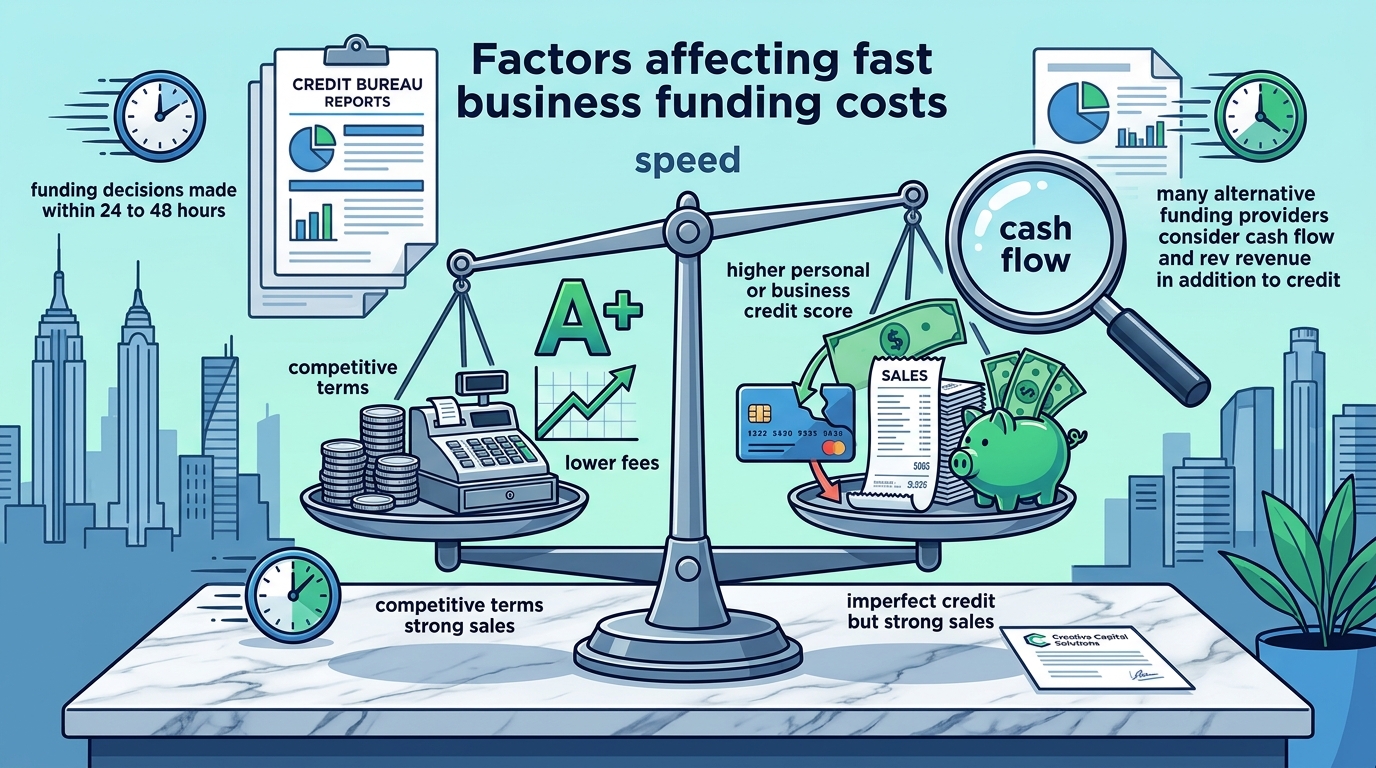
While credit is not the only factor, it plays a significant role in pricing. A higher personal or business credit score can lead to lower fees. However, many alternative funding providers consider cash flow and revenue in addition to credit. This means that businesses with imperfect credit but strong sales may still qualify for competitive terms. It is important to understand that credit is one piece of the puzzle, not the sole determinant of cost. For additional details, review the Creative Capital Solutions Apply.
Product Type and Structure
The structure of the funding product directly impacts the total cost. A merchant cash advance is the purchase of future receivables, not a loan. In this structure, you receive a lump sum in exchange for a percentage of future sales. The cost is often expressed as a factor rate rather than an annual percentage rate (APR). Conversely, a business line of credit is a type of small business loan that provides funding to draw from whenever you are in need of capital. Lines of credit typically use interest rates and fees that may differ from advance structures. Choosing the right product type is critical for managing long-term expenses.
Term Length and Repayment
The duration of the funding agreement affects the total amount paid back. Shorter terms may have higher periodic payments but lower total costs over time. Longer terms spread payments out, which can ease cash flow pressure but may increase the total cost of capital. For instance, a 12-month advance may cost less in total than a 24-month advance for the same principal amount, depending on the provider's pricing model.
Industry Risk and Seasonality
Lenders assess the inherent risk of your industry. Some sectors, such as construction or hospitality, are considered higher risk due to project-based revenue or seasonal fluctuations. This risk assessment can influence the pricing of your funding. A business in a stable, year-round industry like healthcare may receive different terms than a seasonal retail store. Creative Capital Solutions specializes in understanding these industry nuances to find providers who are comfortable with your specific sector.
Seasonal Revenue Patterns
If your business has significant seasonal peaks and troughs, lenders may adjust terms to account for this variability. For example, a ski resort with high revenue in winter and low revenue in summer may face different pricing structures than a business with consistent monthly income. Understanding how your revenue patterns affect pricing helps you prepare for the application process.
Market Conditions and Provider Competition
Regulatory and State Requirements
State regulations can also impact the cost and structure of funding. States such as New York, California, and Texas have specific disclosure and registration requirements for commercial financing. These regulations ensure transparency and can affect the types of products available to you. It is essential to work with a provider who complies with all relevant state laws to avoid unexpected costs or legal issues.
Key Takeaways
- Financial health, including sales and bank balances, is a primary driver of funding costs.
- Product structure, such as advances versus lines of credit, significantly impacts total expenses.
- Industry risk and seasonality can influence the terms offered by providers.
- Market conditions and provider competition play a role in pricing.
- State regulations affect the availability and structure of funding products.
- Working with a broker can help you navigate these factors to find suitable terms.
Frequently Asked Questions
What is the main factor that affects the cost of fast business funding?
The main factor is your business's financial profile, including revenue, time in business, and credit history. Lenders use these metrics to assess risk and determine pricing.
How does a merchant cash advance differ from a loan in terms of cost?
A merchant cash advance is a purchase of future receivables, not a loan. It is typically priced with a factor rate, while loans use interest rates. The total cost structure differs between the two.
Does having bad credit automatically disqualify me from fast funding?
No, credit is not the only factor. Many providers consider cash flow and revenue. Businesses with strong sales but imperfect credit may still qualify for funding.
How does industry type affect funding costs?
Higher-risk industries, such as those with seasonal revenue or project-based work, may face different pricing terms compared to stable, year-round businesses.
Can I negotiate the cost of my funding?
Are there state-specific regulations that affect funding costs?
Yes, states like New York and California have specific disclosure requirements that can influence the structure and cost of funding products.