

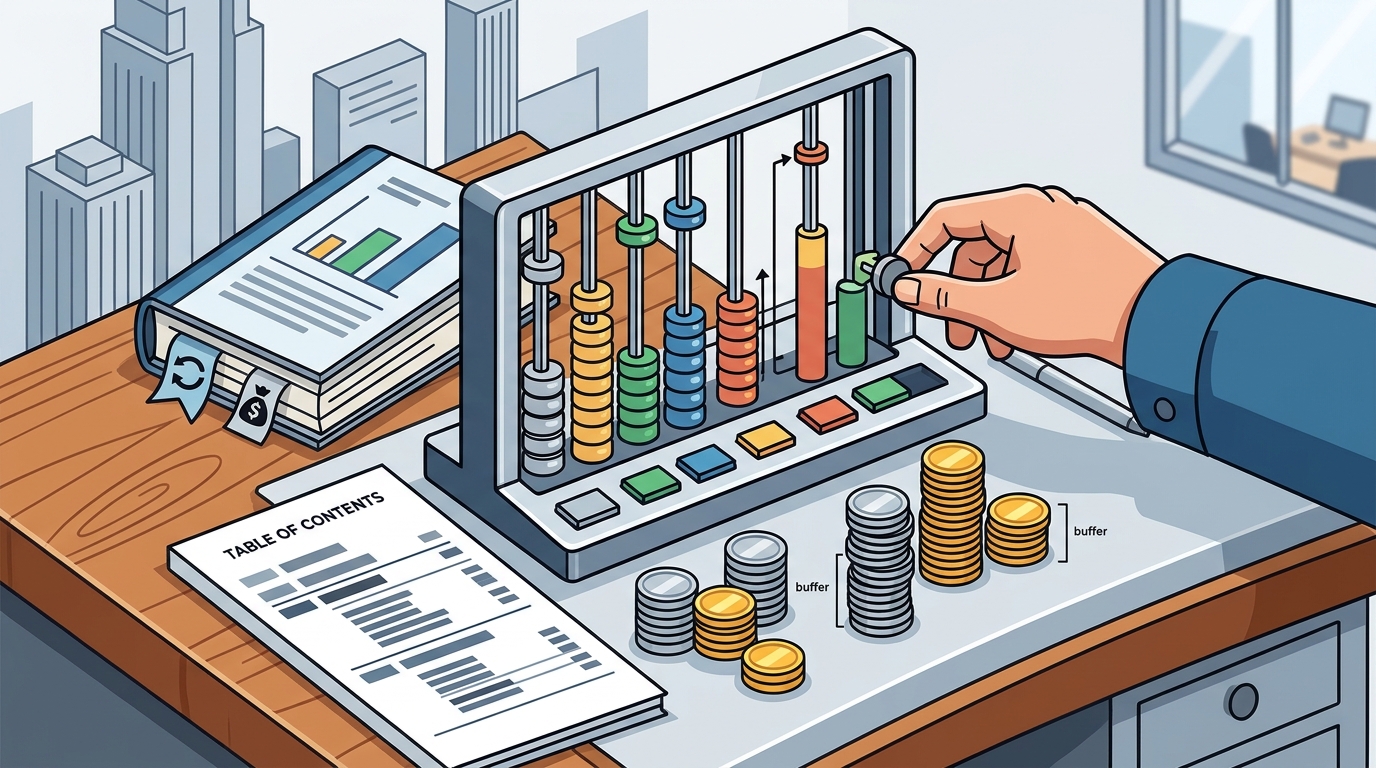
When budgeting for a small business line of credit, you should allocate funds for the minimum payment plus a buffer for interest accrual. A line of credit is a revolving facility that allows you to borrow, repay, and borrow again. Because you only pay interest on the amount you actually draw, your monthly cash flow requirement fluctuates based on your outstanding balance and the specific terms of your agreement.
Understanding the Mechanics of Revolving Credit
Unlike a term loan, which provides a lump sum to be repaid in fixed installments, a line of credit functions like a high-limit credit card for your business. A business line of credit is a type of small business loan that provides funding to draw from whenever you are in need of capital. This structure allows you to access money to handle cash flow gaps, buy more inventory, and address emergencies or opportunities that may arise. Rather than receiving a fixed amount of funding like you would with a loan, a line of credit allows you access a certain amount of money which you can borrow from, pay back, and borrow again.
Calculating Your Minimum Monthly Obligation
Interest Rates and Their Impact on Cash Flow
The interest rate is the single most significant variable in your monthly budget. Commercial lines of credit typically carry variable rates tied to a benchmark index, such as the Prime Rate or SOFR, plus a margin. This means your monthly payment can change over the life of the facility. When budgeting, you should use a conservative estimate of the interest rate. If the current rate is 8%, budgeting for 10% or 12% provides a safety margin against rate hikes.
For businesses with seasonal cash flow, such as retail or hospitality, this variability is particularly important. You may draw down funds during peak seasons and pay them down during slower months. Creative Capital Solutions works with businesses across various industries, including hospitality and retail, to structure terms that align with their specific cash flow cycles. By modeling your payments at a higher interest rate, you ensure that a rate increase does not disrupt your operational budget.
Strategic Repayment and Principal Reduction
Businesses should also consider the opportunity cost of keeping the line of credit open. If you have excess cash, paying down the line of credit may yield a higher return than keeping that cash in a low-yield savings account. However, you must maintain enough liquidity to cover daily operations. A balanced approach involves paying down the balance when cash flow is strong and drawing on the facility when cash flow is tight. This flexibility is the core value proposition of a line of credit over a fixed-term loan.
Common Budgeting Mistakes to Avoid
One of the most common mistakes is treating the line of credit as a source of free cash. Because the funds are available, some business owners draw on the facility for expenses that should be covered by revenue. This leads to a permanent balance that accrues interest indefinitely. To avoid this, establish a strict policy on when and why you draw on the line of credit. Use it for genuine cash flow gaps or strategic investments, not for covering operational inefficiencies.
Another mistake is ignoring the fees associated with the facility. Some lines of credit have annual maintenance fees or draw fees. These costs should be included in your monthly budget, even if they are not part of the principal and interest payment. By accounting for all costs, you get a true picture of the expense of using the facility. Creative Capital Solutions provides working capital advances and other financing options, and it is important to understand the total cost of each product before committing.
Key Takeaways
- A business line of credit is a revolving facility where you pay interest only on the amount you draw.
- Your minimum payment may not cover all accrued interest, so budget for the full interest accrual to prevent balance growth.
- Variable interest rates mean your monthly payment can change, so budget using a conservative rate estimate.
- Paying more than the minimum reduces principal and lowers future interest costs, improving net profit.
- Avoid using the line of credit for routine expenses; reserve it for cash flow gaps and strategic investments.
- Include all fees, such as annual maintenance or draw fees, in your monthly budget for accurate cost tracking.
Frequently Asked Questions
What is the difference between a line of credit and a term loan?
A line of credit is a revolving facility that allows you to borrow, repay, and borrow again up to a set limit. A term loan is a lump sum that is repaid in fixed installments over a set period. With a line of credit, you only pay interest on the amount you actually use, whereas with a term loan, you pay interest on the full amount from day one.
How is the minimum payment on a line of credit calculated?
The minimum payment is typically defined in your credit agreement. It is often a fixed dollar amount or a percentage of the outstanding balance, whichever is greater. It is important to check if the minimum payment covers all accrued interest, as it may not.
Can I pay off my line of credit early?
Yes, you can typically pay down or pay off your line of credit at any time. Paying it off early reduces the amount of interest you will accrue in the future. Check your agreement for any prepayment penalties, though these are less common on lines of credit than on term loans.
What happens if I only make the minimum payment?
If you only make the minimum payment, your balance may not decrease, or it may even grow if the minimum payment is less than the accrued interest. This can lead to a higher total cost of borrowing over time. It is generally better to pay more than the minimum to reduce the principal.
How does a variable interest rate affect my monthly budget?
A variable interest rate means your monthly interest charge can change as the benchmark rate changes. To budget effectively, you should model your payments at a higher interest rate than the current one to account for potential increases. This ensures your budget remains stable even if rates rise.
Are there fees associated with a business line of credit?
Yes, there may be fees such as annual maintenance fees, draw fees, or inactivity fees. These fees should be included in your monthly budget. Review your credit agreement carefully to understand all potential costs associated with the facility.
Conclusion
Budgeting for a small business line of credit requires a clear understanding of how revolving credit works. By focusing on the full interest accrual rather than just the minimum payment, you can maintain a stable balance and reduce your overall cost of borrowing. Creative Capital Solutions is a commercial financing broker that connects businesses with third-party funding providers, offering flexible options like business lines of credit to support your growth. To plan your visit or discuss your financing needs, to explore the right solution for your business.